Why Cats Scratch Furniture and How to Redirect It
Learn why cats scratch furniture and how to guide them toward better surfaces using placement, rewards, and patience—not punishment.
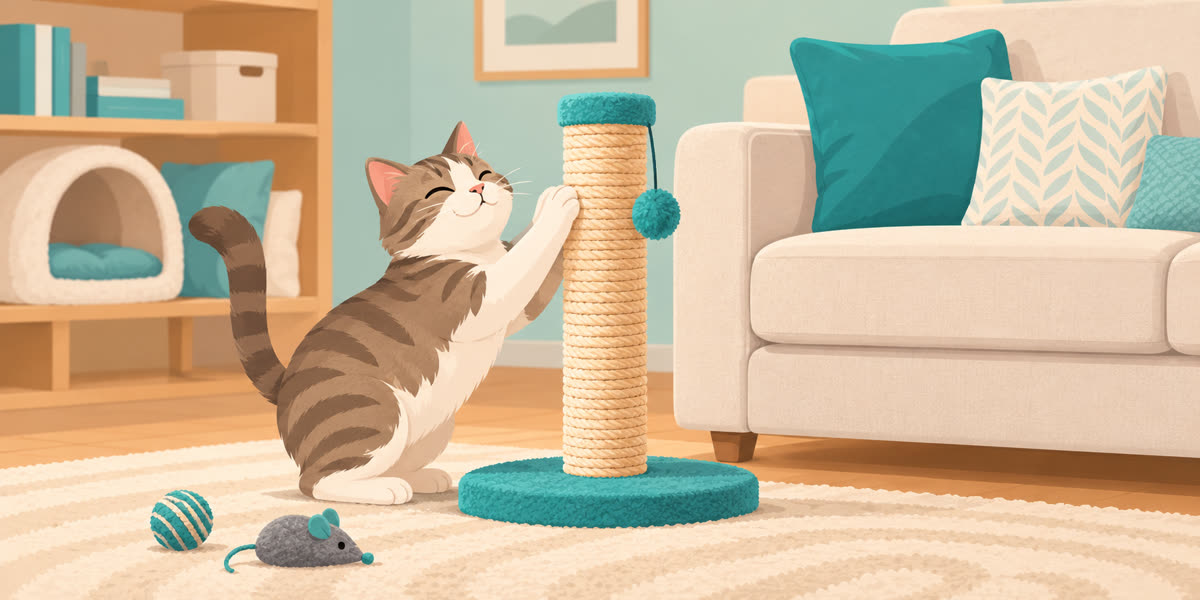
Scratching is a normal, healthy behavior for cats, not an act of spite. You can protect your furniture by offering appealing alternatives, rewarding their use, and making problem areas less inviting.
Key takeaways
- Scratching is a natural feline need.
- Place scratchers near favorite furniture and resting spots.
- Offer different materials, heights, and angles.
- Reward appropriate scratching right away.
- Avoid yelling, spraying, or physical punishment.
Why cats scratch
Cats scratch to maintain their claws, stretch their muscles, and leave visual and scent marks. Scratching can also help them release energy or tension.
Because the behavior is instinctive, trying to stop it completely is unrealistic. The goal is to give your cat acceptable places to scratch.
Choose scratchers your cat will use
Match the scratcher to your cat's preferences. Some cats like tall, sturdy vertical surfaces, while others prefer flat or angled ones.
The surface should feel satisfying and remain stable during use. A vertical scratcher should be tall enough for your cat to stretch fully.
- Try vertical and horizontal options
- Offer varied textures
- Choose a stable base
- Replace heavily worn scratchers as needed
Put scratchers in the right places
Location often matters more than quantity. Place a scratcher directly beside the furniture your cat targets, rather than hiding it in another room.
Cats also commonly scratch after waking or in socially important areas. Put additional scratchers near sleeping spots, room entrances, or places where your family spends time.
- Start beside the targeted furniture
- Add one near favorite sleeping areas
- Keep scratchers in visible, accessible spots
- Provide multiple options in multi-cat homes
Reward the behavior you want
Praise your cat calmly or offer a small treat immediately after they use an approved scratcher. Play near it with an interactive toy, but never force your cat's paws onto the surface.
If your cat approaches the furniture, gently guide their attention toward the nearby scratcher. Consistent rewards help make the new location more appealing.
- Reward immediately
- Use play to build interest
- Keep training sessions brief
- Be patient and consistent
Protect furniture without punishment
Temporarily cover favorite scratching areas with a smooth, securely attached barrier or furniture-safe material that feels less appealing. Keep an acceptable scratcher next to the protected area.
Regular nail trims may reduce damage, but they do not replace scratching outlets. Ask a veterinarian or veterinary professional to demonstrate safe trimming if you are unsure.
- Avoid yelling or startling
- Never hit or physically restrain your cat
- Do not spray water
- Do not use essential oils or unsafe deterrents
- Clean marked areas with a pet-safe cleaner
Troubleshoot ongoing scratching
If your cat ignores a scratcher, reconsider its location, stability, angle, height, or texture. Move it gradually only after your cat uses it reliably.
Sudden or excessive scratching can sometimes occur alongside stress. Look for household changes, conflict between pets, limited resources, or changes in routine, and provide quiet resting places and predictable daily care.
- Test another surface or angle
- Add separate resources for each cat
- Increase appropriate play and enrichment
- Track when and where scratching occurs
When to call the vet
- Call your veterinarian if scratching changes suddenly, becomes intense, or occurs with limping, painful paws, damaged claws, skin problems, hiding, appetite changes, or other unusual behavior. A veterinarian can check for pain or illness and help with persistent stress-related behavior.
Helpful finds on sale
If you need any of these, here are a few well-rated options on sale right now.


Like this kind of find? We post 3 hand-picked pet deals a day on Telegram, free.
Join on TelegramBrowse pet deals →