Litter Box Basics: Number, Placement, Cleaning
Learn how many litter boxes cats need, where to place them, and how often to scoop and clean them.
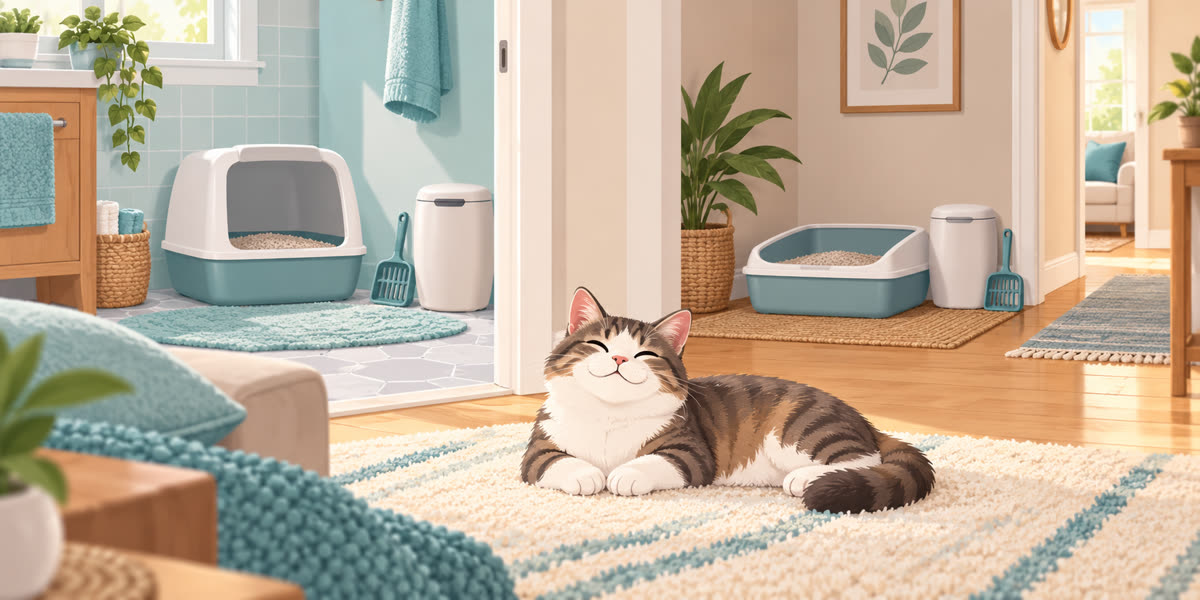
A good litter box setup helps cats feel safe and comfortable while keeping your home cleaner. The basics are simple: provide enough boxes, choose quiet and accessible locations, and clean them regularly.
Key takeaways
- Provide one box per cat, plus one extra.
- Place boxes in separate, quiet, easy-to-reach areas.
- Scoop at least once daily.
- Wash boxes regularly with mild, unscented soap.
- Call a vet about sudden changes in litter box habits.
How many litter boxes do cats need?
A widely accepted guideline is one litter box per cat, plus one extra. For example, two cats should have three boxes.
Place boxes in different locations rather than lining them up together. Cats may view nearby boxes as a single toileting area, and one cat could block another cat's access.
- One cat: two boxes
- Two cats: three boxes
- Three cats: four boxes
- Add more if accidents or guarding occur
Where should litter boxes go?
Choose quiet, low-traffic locations where your cat can see the surroundings and leave easily. Each box should be accessible at all times.
Avoid placing boxes beside food and water, loud appliances, or areas where a cat may feel trapped. In a multilevel home, keep at least one box on each level your cat uses.
- Use separate locations
- Provide an easy escape route
- Avoid noisy or busy spots
- Keep boxes away from food and water
- Make boxes easy to reach
Choose a comfortable setup
The box should be large enough for your cat to enter, turn around, dig, and squat comfortably. Many cats prefer uncovered boxes because they offer more space, ventilation, and visibility.
Kittens, senior cats, and cats with limited mobility may need a low entry. Most cats prefer unscented litter, and sudden changes in box style or litter can lead to avoidance.
- Choose a roomy box
- Offer a low entry when needed
- Consider an uncovered box
- Use unscented litter
- Make changes gradually
How often should you clean it?
Scoop urine clumps and stool at least once a day. In busy multi-cat homes, scooping more often may help keep boxes appealing.
Regularly empty the box, wash it with warm water and mild, unscented soap, dry it, and add fresh litter. How often a full change is needed depends on the litter type, number of cats, and box use.
- Scoop daily or more often
- Top up clean litter as needed
- Wash the box regularly
- Avoid strong fragrances
- Replace cracked or damaged boxes
Watch for litter box problems
If a cat avoids the box, first check cleanliness, access, location, litter depth, and whether another pet is blocking the area. Clean accidents promptly with an odor-removing cleaner, and do not punish your cat.
Urinating or defecating outside the box can also signal pain, illness, stress, or mobility problems. A sudden change should not be treated as bad behavior.
- Keep boxes consistently clean
- Provide private, unblocked access
- Never punish accidents
- Note changes in urine or stool
- Track how often your cat uses the box
When to call the vet
- Contact your veterinarian if your cat suddenly stops using the box, strains, cries, urinates frequently, produces little or no urine, has blood in urine or stool, or shows pain. Inability to pass urine is an emergency, especially in male cats.
Like this kind of find? We post 3 hand-picked pet deals a day on Telegram, free.
Join on TelegramBrowse pet deals →