How to Stop a Dog Pulling on the Leash
Teach your dog to walk on a loose leash with simple, reward-based steps, short practice sessions, and consistent handling.
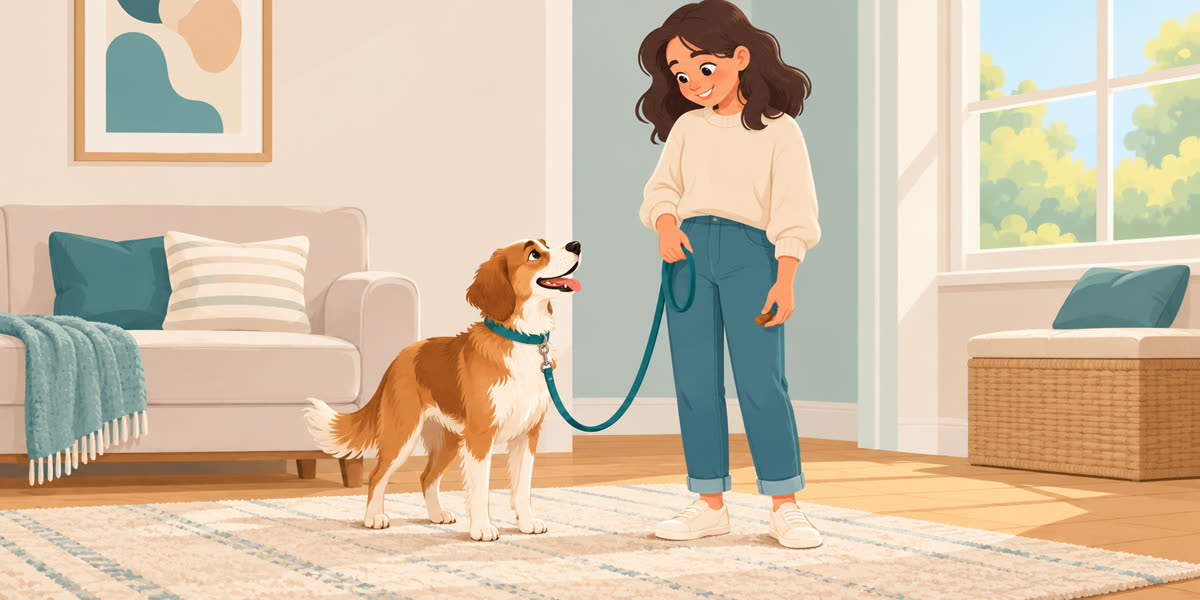
Leash pulling is common because moving forward often rewards the behavior. You can teach a loose-leash walk by rewarding the position you want and calmly stopping when the leash becomes tight.
Key takeaways
- Use comfortable, secure walking gear.
- Start training in a quiet place.
- Reward your dog while the leash is loose.
- Stop or change direction when pulling starts.
- Practice briefly and consistently.
1. Choose safe, comfortable equipment
Use a well-fitting harness or flat collar and a standard fixed-length leash. Check that your dog cannot back out of the equipment and that you can hold the leash comfortably.
Avoid leash corrections, choking, or painful tools. These can cause discomfort or fear and do not teach your dog what to do instead.
- Check the fit before every walk.
- Keep identification tags current.
- Avoid retractable leashes during training.
2. Begin in a low-distraction area
Start indoors, in a yard, or on a quiet sidewalk. Stand beside your dog and reward any moment when the leash is slack and your dog is near you.
Take one or two steps, then reward your dog beside your leg. Gradually add more steps as your dog succeeds.
- Use small, appealing treats.
- Keep sessions to a few minutes.
- Choose one side for consistency.
- Use calm praise.
3. Stop forward movement when the leash tightens
When your dog pulls, stop walking. Keep your arm steady without jerking the leash, and wait for your dog to turn back or create slack.
As soon as the leash loosens, mark the moment with praise and move forward again. This teaches that a loose leash makes the walk continue, while pulling does not.
- Be patient and consistent.
- Do not drag your dog back.
- Reward before the leash becomes tight when possible.
4. Use turns and attention games
If your dog is too excited to pause, calmly turn and walk a few steps in another direction. Reward your dog for following and catching up without tightening the leash.
Practice saying your dog’s name once, then reward a glance toward you. You can also reward voluntary check-ins throughout the walk.
- Turn before reaching major distractions.
- Keep the leash loose during turns.
- Increase distance from triggers when needed.
5. Build skills gradually
Once your dog can walk well in a quiet place, practice near mild distractions. Add busy locations, longer walks, and closer distances only when your dog can remain responsive.
Allow safe sniffing breaks as part of the reward. If either of you becomes frustrated, move to a quieter area or end the training session and try again later.
- Change one challenge at a time.
- Reward often in new places.
- Give regular sniffing breaks.
- Consider a qualified reward-based trainer if progress stalls.
When to call the vet
- Call your veterinarian if pulling begins suddenly or your dog shows coughing, gagging, limping, pain, breathing trouble, weakness, or reluctance to walk. Seek prompt care for breathing difficulty or collapse.
Helpful finds on sale
If you need any of these, here are a few well-rated options on sale right now.


Like this kind of find? We post 3 hand-picked pet deals a day on Telegram, free.
Join on TelegramBrowse pet deals →