House-Training a Puppy: A Simple Schedule
Use a consistent potty schedule, close supervision, and rewards to help your puppy build reliable house-training habits.
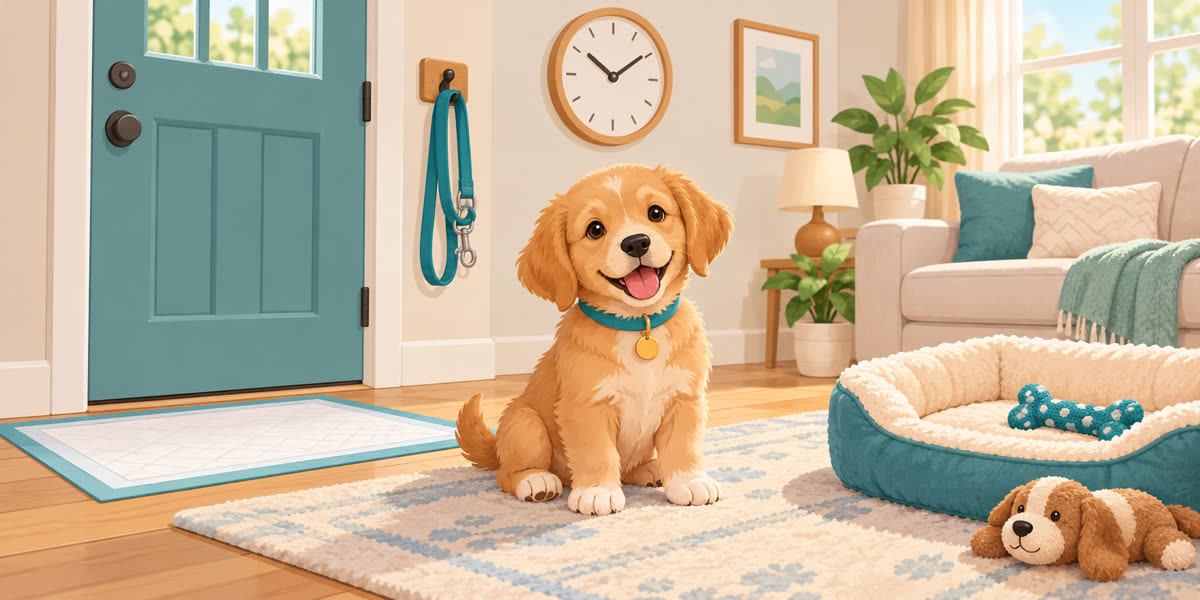
House-training works best when your puppy gets frequent chances to potty in the right place. A predictable routine, close supervision, and calm rewards can make the process easier for both of you.
Key takeaways
- Take your puppy out on a consistent schedule.
- Reward outdoor potty trips right away.
- Supervise closely or use a safe confined area.
- Clean accidents without punishing your puppy.
- Expect progress to take time.
Start With a Simple Daily Schedule
Take your puppy to the same outdoor potty area after waking, after meals or drinking, after play, after naps, and before bedtime. Very young puppies also need frequent trips while awake.
At first, plan a potty break about every one to two hours when your puppy is awake. Individual needs vary, so shorten the interval if accidents occur.
- First thing in the morning
- After eating or drinking
- After naps and active play
- Before and after confinement
- Before bedtime
- Whenever you notice potty signals
Make Each Potty Trip Clear and Calm
Use the same door and outdoor spot when practical. Keep your puppy on a leash, stand quietly, and allow several minutes to sniff and eliminate.
As soon as your puppy finishes, offer calm praise and a small treat. Rewarding immediately helps connect the behavior with the reward. A little supervised play afterward can also prevent puppies from learning that potty time always ends outdoor fun.
- Choose a consistent potty spot
- Use a simple cue once
- Wait quietly
- Reward immediately after success
Supervise or Confine
Indoors, keep your puppy nearby so you can notice sniffing, circling, pacing, whining, or suddenly leaving the room. Take the puppy outside promptly when you see these signals.
When active supervision is not possible, use a properly sized crate or a small, puppy-safe area for short periods. Confinement should never replace regular potty breaks, exercise, social contact, or rest.
- Keep the puppy in sight
- Use gates or a leash indoors if helpful
- Provide frequent breaks from confinement
- Never use the crate as punishment
Handle Accidents Without Punishment
If you catch your puppy starting to eliminate indoors, interrupt gently and take the puppy outside. Reward if the puppy finishes there. Do not yell, rub the puppy's nose in the mess, or punish after the fact.
Clean the area thoroughly with a pet-safe enzymatic cleaner so lingering odor does not attract the puppy back. Then review the schedule and increase supervision or add more frequent trips.
- Stay calm
- Clean promptly
- Do not punish
- Adjust the routine after accidents
Build Reliability Gradually
Keep a simple log of meals, water, potty trips, and accidents. Patterns can help you predict when your puppy needs to go.
After your puppy has been accident-free for a while, gradually extend the time between daytime trips and allow more supervised freedom. Nighttime control develops at different rates, and young puppies may still need an overnight break.
- Track timing and patterns
- Increase freedom slowly
- Keep meals on a regular schedule
- Expect occasional setbacks
When to call the vet
- Contact your veterinarian if your puppy strains, seems painful, has blood in the urine or stool, develops diarrhea or vomiting, drinks or urinates much more than usual, or suddenly has frequent accidents. Very young puppies with repeated diarrhea, vomiting, weakness, or poor appetite should be evaluated promptly.
Helpful finds on sale
If you need any of these, here are a few well-rated options on sale right now.


Like this kind of find? We post 3 hand-picked pet deals a day on Telegram, free.
Join on TelegramBrowse pet deals →